
The Rivian Mind Robotics connection: custom chips, a billion-dollar robotics startup, and why an R2 owner went from nervous to (mostly) convinced.

Building an electric car company is hard. Just ask RJ Scaringe. He founded Rivian in 2009, and it took more than a decade before the first customer drove one home.
I’ve followed Rivian for years. I own one, and I’ve referred hundreds of people to the brand. What pulled me in wasn’t only the vehicles. It was what Rivian stood for: taking an EV off the beaten path. When the R2 launched, I was excited that a lot more people would finally get to experience that.
But believing in a young EV company is also a little scary. I don’t want my R2 to end up like a Fisker, where owners wake up wondering whether they’ll be able to get service, parts, or even software updates.
So when I see Rivian, still working toward profitability, pouring money into self-driving, designing its own computer chips, and watching its CEO start a separate robotics company, my first reaction is simple: why take on so much when Rivian still has so much to prove?
After watching a long interview with RJ, I think I finally get the answer.
The facts, simplified
1. Rivian is building its own self-driving “brain”
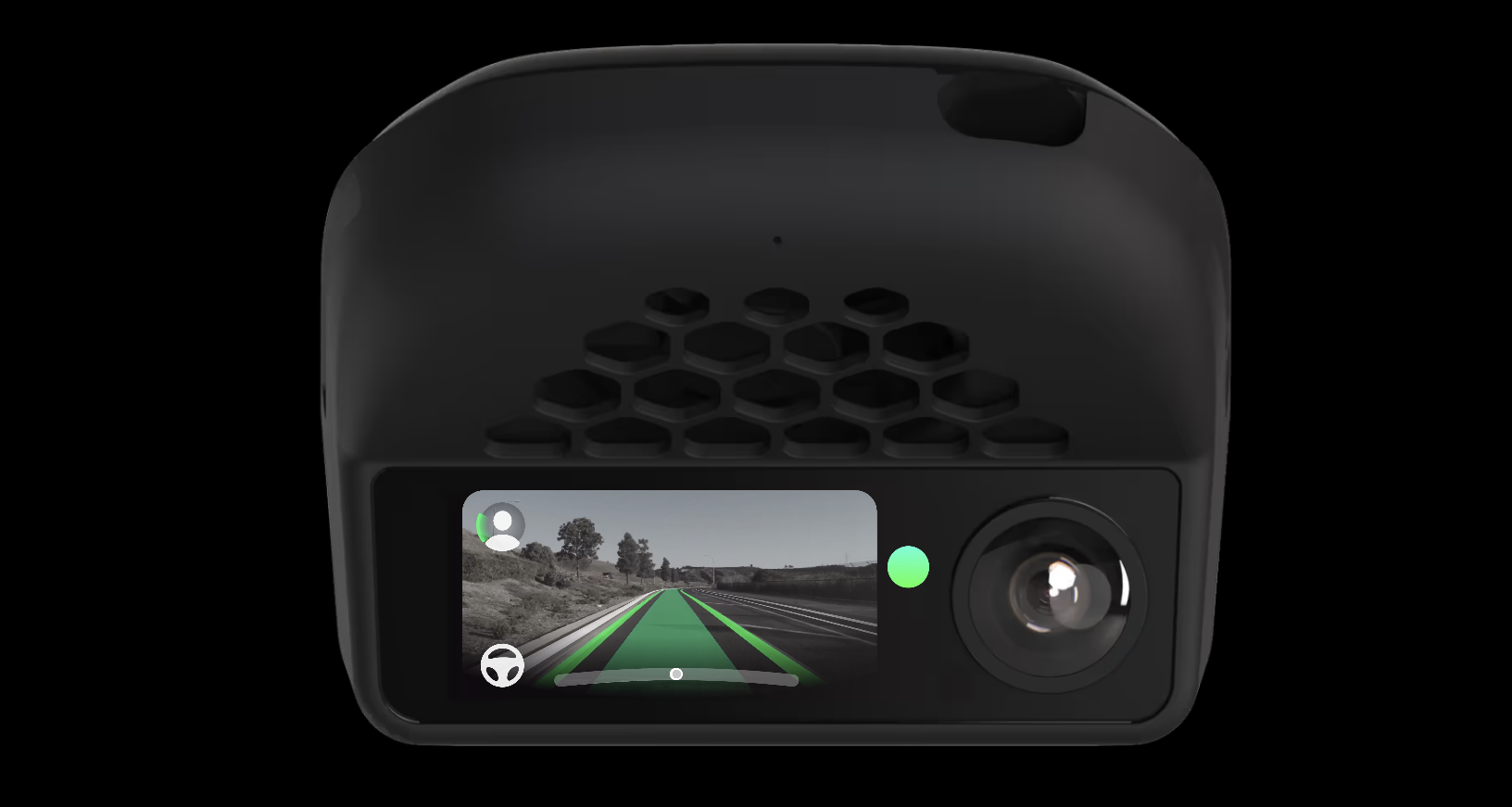
Tesla has a big head start on self-driving, and RJ openly acknowledges Rivian has catching up to do. His plan is for Rivian to control the whole stack itself: the cameras and sensors, the software that understands the road, and the computer that runs it all.
That computer is the expensive part. Self-driving takes a huge amount of onboard processing, and according to RJ, the chip doing that work is one of the biggest costs in the system.
So Rivian designed its own:
- The chip: the Rivian Autonomy Processor (RAP1), revealed at Rivian’s first Autonomy & AI Day in December 2025. It’s a custom 5nm chip built with Arm and made by TSMC.
- The computer: RAP1 powers Rivian’s Gen 3 Autonomy Computer, rated at 1,600 TOPS (trillion operations per second). Rivian says that’s about four times the performance of the Nvidia-based system in its current vehicles.
- Why it matters: when one company designs both the chip and the software that runs on it, it can tune them for each other. Over time that should mean better performance at a lower cost per vehicle.
- The catch: Rivian has to spend the money developing the chip before any of those savings show up.
2. RJ started a robotics company
In November 2025, Mind Robotics spun out of Rivian, with RJ as its founder. It has grown fast, according to TechCrunch and other reports:
- $115 million seed round in late 2025
- $500 million Series A in March 2026
- $400 million more in May 2026
- Total: over $1 billion raised, at a valuation reported around $3.4 billion
Two things worth knowing:
- It’s a separate company. That money isn’t coming out of Rivian’s bank account.
- Rivian is its first customer. The robots are being built to work inside Rivian’s factories.
The problem Mind is going after: most factory robots repeat the exact same movements in the exact same order. Move a part slightly out of place and they stop working. That’s why people still do many repetitive factory jobs. Mind wants robots that can see what’s in front of them and adapt, starting with simple jobs like picking up a part and placing it somewhere else.
3. The two bets are connected
As RJ explained how these robots work, the ingredients started to sound familiar: cameras, sensors, AI, and an onboard computer powerful enough to make decisions in real time.
That’s the same recipe as a self-driving car.
A car navigating a road and a robot picking up a part on an assembly line are solving different problems, but both have to:
- Understand what’s happening around them
- Process information from sensors
- Decide what to do next
RJ said the computing platform developed inside Rivian is also being used for robotics. Both sides also run on the same fuel, which is data. Rivian’s vehicles collect driving data to train its self-driving models. Mind collects data from people doing real factory work to train its robots.
Put it together and you get a loop:
- Rivian builds computing technology for self-driving.
- That technology helps power Mind’s robots.
- Mind’s robots could make Rivian’s factories more efficient.
- Rivian’s factories give Mind a real place to build and test those robots.
These aren’t random side projects. That’s the real Rivian Mind Robotics connection: each bet can make the others more valuable.
My take
When I bought my Rivian, I thought I was supporting a company that wanted to change how we drive. After listening to RJ, I can see his ambitions go well beyond transportation. The same technology that could help a car drive itself could help a robot do work that has always needed a human.
But a strategy that makes sense isn’t the same as a strategy that works. RJ knows better than almost anyone how hard it is to build hardware at scale, and supply chains alone have nearly broken this company before. For all of this to pay off:
- Rivian has to keep ramping R2 production.
- Its hands-free and point-to-point driving has to get meaningfully better.
- Its custom chips have to justify what they cost to develop.
- Mind Robotics has to prove its robots can do useful work, reliably, every day.
None of that is guaranteed. As an owner, I can’t ignore those risks just because the technology is exciting. But I also can’t ignore the possibility that these investments are what give Rivian a stronger business long term.
I still worry about Rivian’s future. I’m not sure all of this will work. But I understand the vision a lot better now, and maybe the feeling of being part of something bigger was never just about a vehicle.
Watch my full video above for RJ’s own explanations, and subscribe to the newsletter for a Rivian news breakdown every other week.

Leave a Reply